Key planning information for artificial insemination abroad.
$60 fromLowest listed price (Israel)
14 hospitalsList artificial insemination
2Countries with hospitals listed
Artificial Insemination in Middle East is listed from US$60 to US$10,000 at 14 hospitals in Israel and Turkey. Each hospital quotes its own price for your case.
Prices last updated Jul 2017
Description of Artificial Insemination:
What is Artificial Insemination(AI)?
It is the deliberate introduction of sperm into a female’s uterus so as to achieve pregnancy through IVF, by means other than sexual intercourse. Artificial insemination may employ assisted reproductive technology and sperm donation techniques. It is also called intrauterine insemination(IUI).
Semen used in insemination can be fresh, raw or frozen. If the donor sperm is supplied by a sperm bank, it will be quarantined and frozen and will need to be thawed before use. When an ovum has been released by the female, semen is introduced into the female’s vagina, uterus or cervix. This is determined by the method being used.
Who can choose artificial insemination?
Heterosexual couples suffering from male fertility problems
Lesbian couples
Single women
If unable to have vaginal sex due to a disability or psychosexual problem
People with medical conditions that require specific help to conceive
What to expect
Your doctor will confirm that you are ovulating by use of ovulation kits, ultrasound, or blood tests. Your partner will provide a sample of his semen. To make sure sperm count is high, the doctor may ask him to avoid sex 2-5 days prior to the procedure.
The sperm is then washed in a laboratory. Washing the sperm removes chemicals in the semen which may cause discomfort to the woman as well as increase the chances of getting pregnant.
Techniques
Intracervical insemination (ICI): This involves injecting raw (unwashed) semen into the cervix with a needleless syringe. If fresh semen is used, it must be allowed to liquefy before inserting it into the syringe. Alternatively, the syringe may be back loaded. Frozen semen which has been thawed can also be used. Enclosed air is removed from the syringe by pressing the plunger forward before the syringe is inserted into the vagina. A vaginal speculum may be used to hold the vagina open so that the syringe is inserted more accurately. The plunger is then pushed forward and the semen in the syringe is emptied deep into the vagina. The syringe may be left in place for a few minutes and the woman is advised to lie still to improve the success rate.
ICI is the most common artificial insemination technique. The process closely replicates natural insemination as fresh semen is directly deposited onto the neck of the cervix. A conception cap may be inserted into the vagina after insemination. It may be left in place for several hours. Using the conception cap allows a woman to perform her regular activities while the cervical cap holds the semen in the vagina. Using the conception device allows for fresh unliquefied semen to be used.
Intrauterine insemination(IUI): It involves injecting washed sperm into the uterus by using a catheter. Unwashed semen is not used because it may cause uterine cramping, expel the semen and cause pain. The woman should lie down on the table for 15 minutes after IUI for optimal results.
Intrauterine tuboperitoneal insemination(IUTPI): It involves injecting washed sperm into both the fallopian tubes and uterus. The cervix is then clamped. This is to prevent leakage to the vagina and is usually done with a specially designed double nut bivalve(DNB) speculum.
Intratubal insemination(ITI): It involves injecting washed sperm into the fallopian tube.
About Artificial Insemination
Key facts to plan your treatment: how long it takes, your hospital stay, anaesthesia, risks and recovery.
Recovery
Information coming soon. Request a consultation for personalized recovery guidance. Get Quote →
Risks
Mild cramps may be experienced
Bad reaction to medication used
Multiple pregnancies
After care
Information coming soon. Request a consultation for personalized recovery guidance. Get Quote →
Cost of Artificial Insemination by country
Price ranges in US$ for each country with a published range. Each hospital quotes its own price for your case.
A private hospital located on the shorelines of Herzliya, just off Tel Aviv, offering healthcare services to both local and foreign patients. The hospital is affiliated with over 500 Israeli physicians, many of whom hold high level positions at public hospitals.
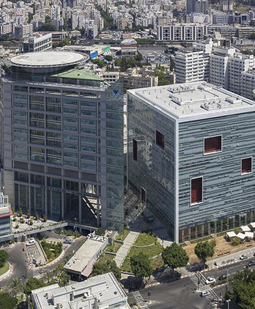
The largest medical center in Israel and the Middle East, internationally renowned for it's medical excellence. Around 31,000 inpatients are treated annually.
The Tel Aviv Sourasky Medical Center IVF Laboratory is one of the largest in Israel and among the most advanced in the world. In vitro fertilization is the process of fertilizing eggs in laboratory conditions outside of a woman’s body, and reintroducing the embryo into a woman’s womb for growth.
The division's In-Vitro-Fertilization (IVF) Unit is renowned for its high rate of successful pregnancies.The division is one of the largest at Rambam Health Care Campus, and includes a team of 40 physicians and approx 100 nurses.
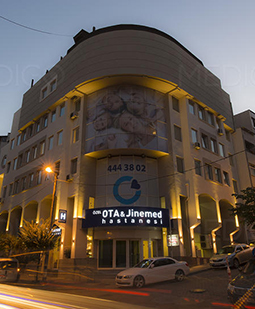
Being the first IVF center of Istanbul, our success rates are the same as that of the most advanced IVF centres in the World. In Jinemed, we help infertile couples not only medically, but spiritually as well.
Bahçeci IVF Centre is a world leading fertility and women’s health group. Since 1996, we have seen 30,000 successful births with success rates well above the EU average.
As Koç Healthcare Institutions, we provide continuity of care through comprehensive healthcare informatics, coordinated teamwork, and well defined care pathways.
Hadassah medical institution includes two university hospitals in Jerusalem – on Mt. Scopus and in Ein Kerem. Both provide advanced tetriary healthcare services in all medical specialties.

 Private Hospital

 JCI

 ISO