Key planning information for sigmoidoscopy in Mexico.
$100 fromLowest listed price
10–20 minsProcedure time
1 hospitalLists sigmoidoscopy
Sigmoidoscopy in Tulum is listed from US$100 to US$400 at 1 hospital. The operation takes 10 to 20 minutes. Each hospital quotes its own price for your case.
Prices last updated May 2017
Cost of Sigmoidoscopy in Mexico
Table of prices by type of procedure, in US$. Each hospital quotes its own price for your case.
Procedure
Minimum price
Maximum price
Sigmoidoscopy
$100
$400
Price starting from $100 up to $400 · last updated May 2017.Final prices are quoted by each hospital
Hospitals and clinics offering Sigmoidoscopy in Tulum
Sigmoidoscopy is listed by 1 hospital in Tulum. The order reshuffles every hour so each gets equal exposure.
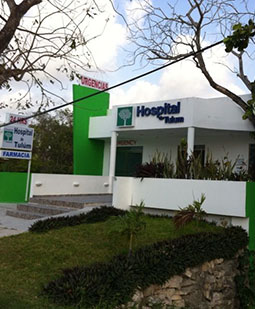
Hospital de Tulum is a small, modern (opened in 2010), second level private medical center. Nine certified physicians and surgeons provide healthcare services to the city of Tulum, the surrounding area, and the tourists who visit this Mexican vacation spot.
What is Sigmoidoscopy?
The examination of the large intestine, from the rectum to the colon using an instrument known as a sigmoidoscope is called sigmoidoscopy. The sigmoidoscope is a flexible tube with a camera and light attached to it. This transmits images from the large intestine which can be viewed though an eyepiece or a monitor. Sigmoidoscopy is used to diagnose colon cancer. It also helps to investigate symptoms like abdominal pain, diarrhea and bleeding. Diagnosis of bowel obstruction, diverticulosis, colon polyps and inflammatory bowel disease can be done with the help of a sigmoidoscopy. During a sigmoidoscopy, abnormal growths can be removed and biopsy can also be conducted.
What are the different types of sigmoidoscopy?
The different types of sigmoidoscopy are:
Flexible Sigmoidoscopy
In flexible sigmoidoscopy, the sigmoidoscope is flexible and is approximately 2.3 feet long and 0.5 inches wide. It enables a thorough view of bends in the lower colon.
Rigid Sigmoidoscopy
Rigid sigmoidoscopy is rarely used. In this procedure the sigmoidoscope is 10 to 12 inches long and 1 inch wide. It enables the doctor to view the rectum and lower colon, however, it does not reach as far as the flexible sigmoidoscope.
How is a sigmoidoscopy performed?
This procedure is performed by a gastroenterologist or a surgeon. You will need to lie on your left side. Your knees need to be drawn up to your chest. First, a digital rectal exam is performed in which the doctor checks for blockage in the rectum and dilates the anus. Then, a sigmoidoscope is inserted into the rectum. To enable better view, air is passed into the colon through the sigmoidoscope. You may feel a need to have a bowel movement during this time. The sigmoidoscope passes up to the sigmoid colon. As the scope is slowly withdrawn the bowel lining is examined carefully. Forceps are passed through the hollow channel of the sigmoidoscope that enables biopsies to be taken.
How to prepare for a sigmoidoscopy?
Your colon needs to be emptied by using enemas and/or laxatives before the sigmoidoscopy. The bowel needs to be empty of stool.
You may also be required to be on a liquid diet since 1 or 2 days prior to the sigmoidoscopy.
You will need to take enema 1 hour prior to the procedure to clear the intestine thoroughly.
About Sigmoidoscopy
Key facts to plan your treatment: how long it takes, your hospital stay, anaesthesia, risks and recovery.
Duration of surgery/treatment
10 to 20 minutes
Days admitted
None. Sigmoidoscopy is usually done on an outpatient basis.
Anesthesia
None
Recovery
- After the sigmoidoscopy, you may feel cramping and bloating due to the air that was passed into your intestine.
- Slight rectal bleeding is possible due to the irritation from the sigmoidoscope insertion.
- You can go home after the procedure, unless the doctor gives special orders for any procedures to be performed after the sigmoidoscopy.
Risks
Rare possibilities of complications in a sigmoidoscopy may include:
- Perforation of the bowel
- Bleeding
- Abdominal pain
- Infection
After care
You should inform the doctor if you have the following symptoms:
- Severe pain in the abdomen
- Heavy bleeding
- Nausea
- Vomiting
 Private Clinic