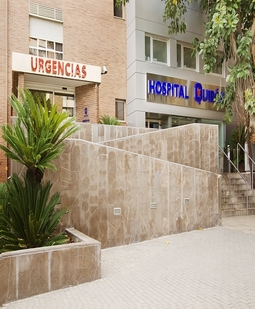
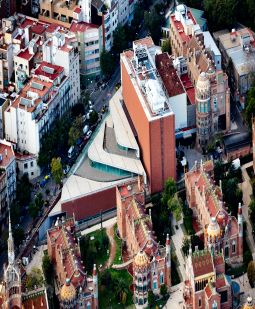
Fundació Puigvert state-of-the-art high technology equipment, including robotic surgery and minimally invasive approach, together with some of the world’s leading specialists and over 60 years of experience, allow the clinic to have served over 600.000 patients
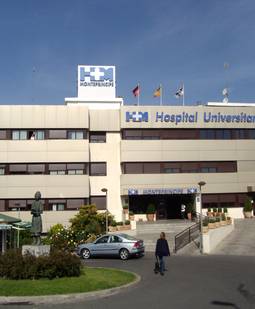
HM Hospitales is a hospital group with six private hospitals in Madrid: three general hospitals, a cardiovascular hospital, an oncological center and a women's health hospital.
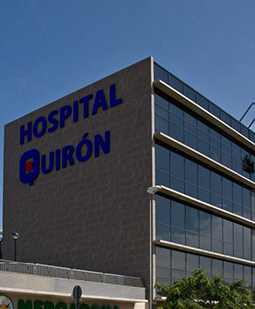
With more than 36 medical specialties, 200 physicians and surgeons of the highest level, Quironsalud Hospital Malaga is one of the most pertinent hospitals in Spain.
Since its founding in the early 80's, they keep their vocation and commitment to provide the patients with a holistic care, providing the highest level of care to implement individualized treatments.
This international hospital incorporates prestigious doctors, invests in research and development, technology and continuing education that enhances skills, in facilities, and in an increased operational efficiency in order to provide nothing but the best
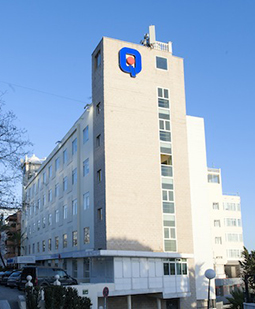
Hospital Quirónsalud Valencia is ranked as one of the best private schools in Spain, winning nine times in the TOP 20 award in recognition of its management and quality of care.
The Fertility Department provides professional advisory services and treatment for all types of infertility and offers all modern types of treatment for infertility, egg grading, and freezing of ovarian tissue.
What is IVM?
In vitro maturation (IVM) is a fertility treatment where the eggs are collected from the ovaries when they are immature and then matured in a laboratory. After maturation, the eggs are fertilized and replaced in the womb.
How is IVM carried out?
Eggs are collected from the ovaries using ultrasound guidance when they are immature, meaning the woman needs to take fewer hormones to stimulate the ovaries than in IVF.
The eggs are matured in a laboratory for one to two days.
The eggs are fertilized with the partner or donor sperm and are replaced back in the womb, as in IVF or ICSI.
Who is a suitable candidate for IVM?
IVM is suitable for women at risk of developing ovarian hyperstimulation syndrome, for example women with polycystic ovarian syndrome. IVM does not require a daily injection of hormones so there is no risk of developing the condition. IVM is an alternative to IVF for younger women as it is less expensive and time consuming than IVF.
What are the chances of success with IVM?
According to the Babyworld, Danish scientists have monitored a 30 per cent success rates using IVM. However, according to the Human Embryology and Fertilisation Authority the chances of success with IVM are similar to those with IVF except there is an added risk that not every egg will be sufficiently mature at the end of the process.
About IVM
Key facts to plan your treatment: how long it takes, your hospital stay, anaesthesia, risks and recovery.
Duration of surgery/treatment
One full cycle of IVM takes between 4 to 6 weeks – the same as an IVF cycle.
Egg collection during IVM takes around 30 minutes to an hour.
Days admitted
None – IVM is an outpatient procedure.
Anesthesia
Egg collection in IVM typically takes place under sedation and not anesthesia.
Recovery
IVM requires a minimal downtime of a few minutes following egg retrieval.
Risks
- Fewer eggs collected than with IVF procedure.
- Infection and bleeding following egg collection.
- IVM is less successful with age.
- Multiple births.
After care
- You may experience cramps and discomfort after egg collection that can be eased with pain killers.

 Private hospital
 ISOPrice on request